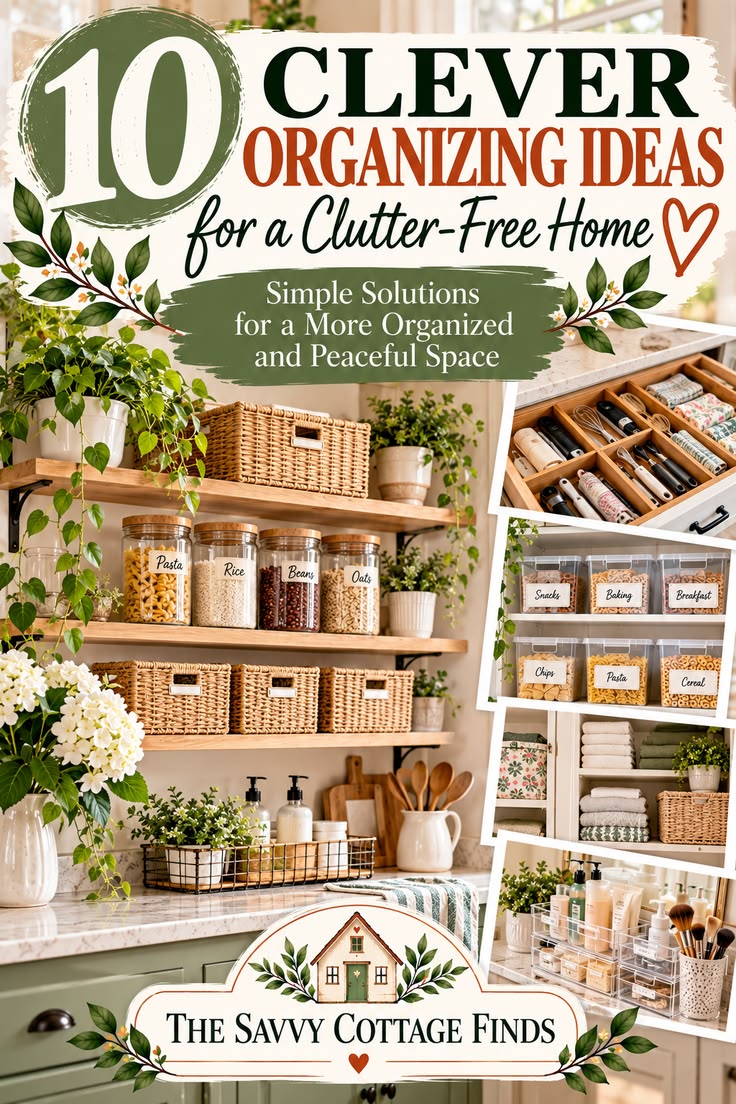

A clean, organized home can make everyday life feel calmer, more comfortable, and less stressful. However, keeping your home clutter-free can be challenging when you have limited storage, a busy schedule, or too many belongings competing for space.
The good news is that you do not need an expensive renovation or a collection of storage products to create an organized home. With a few practical habits, smart storage solutions, and thoughtful decorating choices, you can make every room look neater and feel more spacious.
Whether you live in a small apartment or a large house, these 10 home organization ideas will help you reduce clutter, maximize storage, and create a beautiful, functional living space.
1. Declutter Before Organizing
The first step toward an organized home is removing items you no longer need. Buying storage boxes before decluttering often means you end up organizing things that could have been donated, recycled, or discarded.
Start with one small area, such as a kitchen drawer, bedside table, or bathroom cabinet. Sort the contents into four groups: keep, donate, recycle, and discard.
Ask yourself whether you use the item, whether it is in good condition, and whether it deserves the space it occupies.
Avoid trying to organize your entire home in one day. Working on one area at a time makes the process more manageable and helps you see progress.
Simple tip: Spend 10–15 minutes decluttering each day. Small, consistent efforts can gradually make a noticeable difference.
2. Use Baskets and Storage Bins
Baskets and storage bins are practical ways to keep everyday belongings organized while maintaining an attractive interior.
Use woven baskets in the living room for blankets and magazines, fabric bins in the bedroom for accessories, and labeled containers in cupboards for household supplies.
Matching storage containers can create a coordinated appearance, especially on open shelves.
Choose sizes that fit your existing cabinets, shelves, or wardrobes rather than buying containers first and trying to find space for them later.
For frequently used items, choose open baskets or containers that are easy to access. Use lidded boxes for seasonal decorations or belongings you rarely need.
The goal is to give everything a designated place so that items do not accumulate on tables, chairs, and countertops.
3. Maximize Vertical Storage Space
When floor space is limited, look upward. Walls and the areas above furniture can provide useful storage without making a room feel crowded.
Install shelves for books, decorative objects, or storage baskets. Use wall hooks for coats, bags, keys, and lightweight accessories. In the kitchen, wall-mounted rails can keep frequently used utensils within reach.
In a small bedroom, vertical shelving can provide additional storage without taking up the space needed for a larger dresser.
Keep heavier items on secure shelves and ensure that wall fixings are appropriate for the wall material and intended load.
To maintain a neat appearance, avoid filling every shelf completely. A combination of useful storage and open space will help your room feel more balanced.
4. Organize Your Kitchen Cabinets and Drawers
The kitchen can quickly become cluttered because it contains cookware, food, utensils, appliances, and cleaning products.
Begin by removing duplicate items and grouping similar belongings together. Keep cooking utensils near the cooking area, everyday dishes near the dishwasher or sink, and frequently used ingredients in an accessible cupboard.
Drawer dividers can separate cutlery and cooking tools, while shelf risers help you make better use of cabinet height.
Use clear, airtight containers for suitable dry ingredients and label them to make identification easier.
Store heavy cookware in accessible lower cabinets and avoid placing frequently used appliances where they block valuable preparation space.
A well-organized kitchen is easier to clean, more efficient to use, and more visually appealing.
5. Create a Clutter-Free Living Room
The living room is often used for relaxing, entertaining, reading, and family activities, so it can quickly collect miscellaneous belongings.
Start by clearing coffee tables and side tables. Keep only a few decorative objects, such as a small vase, a tray, or a stack of books, on visible surfaces.
Use baskets to store blankets, remote controls, magazines, and children’s toys. Furniture with hidden storage, such as an ottoman or a coffee table with drawers, can also help keep everyday essentials out of sight.
Manage television and charging cables with suitable cable organizers to reduce visual clutter.
At the end of each day, return items to their designated places.
A living room does not need to be completely empty to look tidy. The key is to create a balance between useful belongings, attractive decorations, and clear surfaces.
6. Make Your Bedroom More Organized
A peaceful bedroom begins with practical storage and a simple layout. When clothes, accessories, and miscellaneous items accumulate, the room can feel smaller and less relaxing.
Start by keeping your bedside table relatively clear and storing clothing in designated drawers or wardrobe sections.
Use drawer dividers for socks and accessories, hanging organizers for smaller items, and suitable containers beneath the bed for spare bedding or seasonal clothing.
Keep your wardrobe organized by grouping similar items together. You can also move clothing that is out of season to another storage area if space permits.
Make your bed each morning and return clothes to the wardrobe or laundry basket rather than leaving them on chairs.
These simple habits can help your bedroom feel cleaner and more comfortable without requiring new furniture.
7. Organize Your Bathroom Essentials
Bathrooms often have limited storage, making it easy for toiletries, cosmetics, towels, and cleaning products to accumulate around the sink.
Begin by checking expiry dates and removing products you no longer use. Group the remaining items into categories, such as skincare, haircare, dental care, and everyday essentials.
Use drawer dividers, small baskets, or cabinet organizers to separate products. A wall-mounted shelf can provide additional storage if it does not obstruct movement or create a moisture problem.
Keep the sink area clear by placing frequently used products on a small tray and storing the rest in a cabinet.
Roll or fold towels neatly and use a suitable basket for spare toilet rolls.
Keep medicines and cleaning chemicals stored safely, away from children and pets. An organized bathroom will be easier to clean and more pleasant to use.
8. Create a Dedicated Entryway Storage Area
The entrance to your home is often the first place where clutter appears. Shoes, coats, bags, keys, and parcels can quickly create a disorganized appearance.
Create a designated place for each item. A shoe rack, coat hooks, a small storage bench, or a narrow console table can help keep everything under control.
If space is limited, use wall hooks and slim shoe storage instead of bulky furniture.
Place a small tray or bowl on a console for keys and other everyday essentials. This prevents them from being scattered across different rooms.
Encourage household members to put shoes and coats away as soon as they enter.
Even a small, well-organized entryway can make your entire home feel tidier and more welcoming.
9. Use Furniture That Offers Hidden Storage
Multifunctional furniture is particularly useful when your home has limited storage space.
Consider an ottoman with a storage compartment, a bed with drawers underneath, a coffee table with shelves, or a bench that opens to reveal additional space.
These pieces allow you to store everyday belongings without adding separate cabinets or bulky storage units.
Before purchasing anything, measure your room and check that drawers, lids, and doors can open comfortably without obstructing walkways.
Choose furniture that suits your existing decor and serves a genuine purpose.
If you already own furniture with unused storage space, start by making better use of it before buying anything new.
Smart storage furniture can help reduce visible clutter while maintaining a comfortable and stylish interior.
10. Build Simple Daily Organization Habits
Even the best storage systems will not remain effective without a few regular habits.
The easiest approach is to create small routines that prevent clutter from building up in the first place.
Try these simple practices:
- Make a daily reset: Spend 10 minutes returning items to their proper places before bed.
- Follow the one-in, one-out rule: When appropriate, remove or donate an old item when bringing a similar new one into your home.
- Handle paperwork regularly: Sort letters, bills, and documents rather than allowing them to accumulate.
- Keep surfaces clear: Return everyday items to drawers, baskets, or cabinets after use.
- Review storage monthly: Check for belongings that are no longer useful or that have been stored in the wrong place.
These habits require little time but can make it much easier to maintain an organized home.
Remember that the goal is not perfection. Your home should remain comfortable and practical for the people who live in it.
Conclusion
Creating a clutter-free home is less about buying storage products and more about developing an organized approach to everyday living.
Start by decluttering one area, then introduce practical storage solutions such as baskets, drawer dividers, wall shelves, and multifunctional furniture. Organize each room according to how you use it, and establish simple habits that prevent unnecessary clutter from returning.
You do not need to transform your entire home at once. Small improvements made consistently can produce lasting results.
Ultimately, an organized home should make your life easier. By giving your belongings designated places, keeping frequently used surfaces clear, and regularly reviewing what you own, you can create a space that feels more spacious, peaceful, attractive, and enjoyable every day.