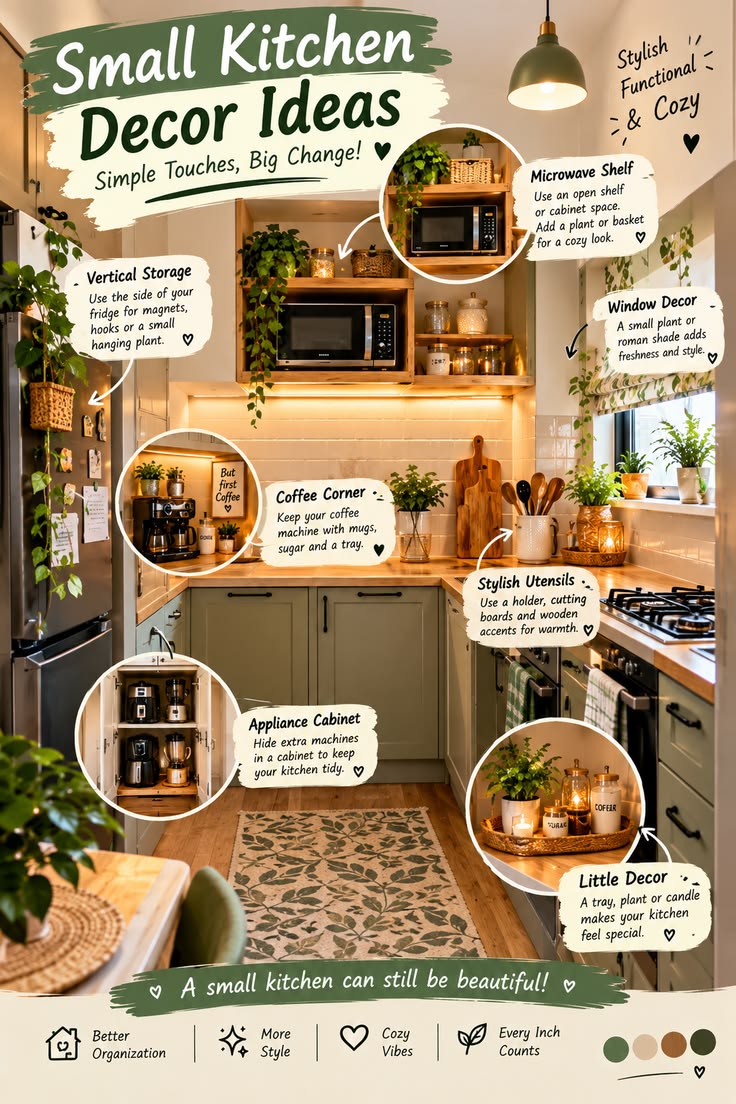

A small kitchen can be both beautiful and functional with the right decorating choices. Even if you have limited counter space, narrow cabinets, or a compact layout, thoughtful design can help you make the most of every corner while keeping your kitchen stylish and organized.
The secret is to combine smart storage, space-saving furniture, suitable colors, and practical accessories. Instead of filling the room with decorations, focus on ideas that improve functionality while making the kitchen feel brighter, more open, and inviting.
Whether you live in a small apartment or have a compact family kitchen, these 15 small kitchen decor ideas can help you maximize space without sacrificing style.
1. Choose Light Colors to Make the Kitchen Feel Bigger
Light colors can help a small kitchen feel brighter and more spacious. Shades such as white, cream, warm beige, and pale grey reflect light and create a clean, open appearance.
Consider using light colors on cabinets, walls, and backsplashes. If you prefer a little contrast, introduce darker accents through handles, light fixtures, or a few decorative accessories.
You do not need an entirely white kitchen to achieve this effect. Soft sage green, pale blue, and warm neutrals can also create a fresh and welcoming atmosphere.
Decorating tip: Keep the main surfaces relatively consistent in color and introduce variety through wood accents, textiles, and small accessories.
2. Make the Most of Vertical Wall Space
When counter space is limited, look upward. Vertical storage can help you organize kitchen essentials without taking up valuable work surfaces.
Install shelves for mugs, jars, cookbooks, or frequently used ingredients. A wall-mounted rail can hold utensils, while hooks can provide convenient storage for oven mitts and lightweight kitchen tools.
If you have unused wall space above a counter, consider a narrow shelf that keeps essentials accessible without interfering with food preparation.
Keep heavier items securely stored and avoid placing objects where they could fall onto the cooking area.
The key is to use wall space thoughtfully rather than covering every available surface with shelves and accessories.
3. Install Open Shelving Carefully
Open shelving can make a small kitchen feel lighter than a wall of bulky cabinets, particularly when the shelves are arranged neatly.
Use open shelves to display attractive everyday items such as matching bowls, glasses, mugs, and storage jars. Natural wood shelves can introduce warmth, while white shelves create a clean, contemporary appearance.
For the best results, group similar items together and leave some empty space between objects.
However, open shelves are not always the best solution for everything. They collect dust and grease more readily than enclosed cabinets, so reserve them for items you use regularly and can clean easily.
A combination of closed cabinets and a small section of open shelving often provides the best balance between style and practicality.
4. Use Magnetic and Wall-Mounted Organizers
Magnetic and wall-mounted organizers are excellent space-saving solutions for compact kitchens.
A magnetic knife strip can free up drawer space, while a magnetic rack may hold suitable metal spice containers. Wall-mounted utensil holders can keep frequently used tools within reach.
You can also install hooks inside cabinet doors for lightweight items or use a mounted paper towel holder to free up counter space.
Before installing any organizer, check its weight capacity and make sure it is suitable for the surface and location.
Choose a few organizers that solve specific problems rather than adding storage accessories everywhere. A more organized kitchen often looks better than one filled with gadgets.
5. Maximize Cabinet Storage
Small kitchens benefit from making better use of existing cabinets before investing in additional storage.
Shelf risers can create extra levels for cups, plates, and pantry items. Pull-out baskets make it easier to access items stored at the back, while drawer dividers help keep utensils organized.
Use stackable containers for dry ingredients and label them clearly so you can identify their contents quickly.
The space beneath the sink can also be organized with suitable baskets or adjustable shelves, leaving room for cleaning supplies and other essentials.
Measure your cabinets before buying organizers to ensure they fit properly and allow doors and drawers to open without obstruction.
6. Choose Compact and Multifunctional Furniture
Furniture that serves more than one purpose can be particularly useful in a small kitchen.
If space allows, consider a narrow kitchen island with storage underneath, a fold-down table, or a compact trolley that can be moved when needed.
A small dining bench with built-in storage can provide seating while keeping less frequently used items out of sight.
For very narrow kitchens, a wall-mounted drop-leaf table may provide an occasional dining surface without permanently occupying floor space.
Always measure the available area carefully and leave enough room to open appliances, cabinets, and drawers comfortably.
The goal is to add useful functionality without making the kitchen harder to move around in.
7. Keep Countertops Clutter-Free
Clear countertops can make even the smallest kitchen feel more spacious.
Start by removing items you rarely use. Store appliances in cabinets when practical, and keep only everyday essentials, such as a kettle or a frequently used utensil holder, on the counter.
Group small items together on a tray to make them easier to move when preparing food.
You can also create designated zones for cooking, making drinks, and food preparation so that everything has a logical place.
Avoid using countertops as permanent storage for groceries, paperwork, and miscellaneous household items.
A tidy work surface improves the kitchen’s appearance and gives you more room to prepare meals comfortably.
8. Add Under-Cabinet Lighting
Good lighting can make a small kitchen feel brighter and more functional.
Under-cabinet lights illuminate work surfaces that might otherwise be shaded by upper cabinets. They can also add a subtle decorative effect in the evening.
LED strip lights or compact under-cabinet fixtures are practical options, depending on your kitchen’s layout and electrical setup.
Choose lighting with a suitable color temperature for your kitchen and sufficient brightness for food preparation.
If you cannot install permanent fixtures, consider suitable plug-in or rechargeable options.
Combine task lighting with general ceiling lighting to create a kitchen that feels comfortable throughout the day.
9. Use a Backsplash to Add Style
A backsplash can introduce personality without taking up any floor or counter space.
Glossy tiles, simple subway tiles, subtle geometric patterns, or a continuous-looking backsplash can complement a variety of kitchen styles.
Light-colored finishes can help maintain a bright appearance, while a patterned backsplash can create a focal point in an otherwise simple kitchen.
If your budget is limited, consider updating a small section behind the hob or sink rather than renovating the entire kitchen.
Choose materials suitable for the amount of heat, moisture, and cleaning required in that area. Peel-and-stick products should only be used where the manufacturer confirms they are appropriate.
10. Introduce Natural Materials
Natural materials can make a compact kitchen feel warmer and more inviting.
Wooden chopping boards, woven storage baskets, ceramic containers, and linen tea towels add texture without requiring substantial decorative space.
For a coordinated appearance, choose a few materials and repeat them throughout the room. For example, wooden accessories paired with cream cabinets and simple black handles can create a contemporary yet comfortable look.
You can also introduce greenery with a small herb pot on a windowsill, provided the location receives enough light.
Keep natural accessories practical and easy to clean, especially near cooking and food preparation areas.
11. Use a Rolling Kitchen Cart
A rolling kitchen cart can provide extra storage and work surface when you need it.
Choose a compact model with shelves, drawers, or hooks to hold kitchen essentials. It can be used as a mobile preparation station, a drinks trolley, or additional pantry storage.
When you are not using it, move it to a suitable corner or another designated space.
Before purchasing, measure the route through the kitchen to ensure the cart can move without obstructing cabinets, appliances, or walkways.
A cart with locking wheels can offer greater stability when stationary, and its top should be suitable for the tasks you intend to perform.
12. Decorate with Mirrors and Reflective Surfaces
Mirrors and reflective finishes can help a small kitchen feel brighter by reflecting available light.
If your layout allows, consider a mirror on a suitable wall away from heat and cooking splashes. Alternatively, use glossy cabinet finishes, reflective backsplash tiles, or glass-fronted cabinets to introduce a similar effect.
Reflective surfaces work particularly well when they capture daylight or a pleasant view.
However, avoid adding mirrors simply to fill an empty wall. Choose a position where the reflection improves the room’s appearance rather than highlighting clutter.
13. Organize the Pantry with Matching Containers
A well-organized pantry can save space and make your kitchen easier to use.
Transfer frequently used dry ingredients into suitable airtight containers and arrange them by category. Matching containers can create a coordinated appearance, while clear labels make it easier to identify contents.
Stackable containers help maximize shelf height, and narrow bins can group packets or smaller items together.
Use a first-in, first-out approach so older food is used before newer purchases, and follow storage instructions for each ingredient.
You do not need to replace every container at once. Start with the pantry items that create the most clutter and gradually improve the organization.
14. Add Small Decorative Details
A small kitchen can still reflect your personality. The key is to choose decorations that enhance the space without interfering with everyday activities.
A simple framed print, a small vase, an attractive fruit bowl, or a neatly displayed collection of mugs can add character.
Choose accessories that complement the kitchen’s colors and materials rather than introducing too many unrelated styles.
If you have a windowsill, a small herb planter or one decorative object may be enough to create a finished look.
Avoid placing decorative items near open flames, hot surfaces, or areas where they could interfere with food preparation.
15. Keep the Floor and Walkways Clear
Floor space is especially valuable in a small kitchen. Too many freestanding storage units, bins, and decorative objects can make the room feel cramped.
Keep frequently used walkways clear and choose slim storage solutions that fit naturally into the layout.
If you use a floor mat, select one that fits the available space and has a suitable non-slip backing.
Consider whether every freestanding item is necessary. Removing an unused trolley or relocating a bin may improve movement more than adding another storage product.
A clear floor also makes cleaning easier and helps the entire kitchen feel more organized.
Conclusion
Decorating a small kitchen successfully is about combining smart storage with simple, practical design choices. Light colors, vertical shelving, organized cabinets, multifunctional furniture, under-cabinet lighting, and clear countertops can all help maximize your available space.
Start by identifying your biggest challenge, whether it is limited storage, insufficient worktop space, or a lack of natural light. Then make gradual improvements that address those specific needs.
You do not need a complete renovation to create a stylish kitchen. By using your existing space more efficiently, choosing practical accessories, and keeping the design uncluttered, you can create a kitchen that feels brighter, more spacious, and enjoyable to use every day.