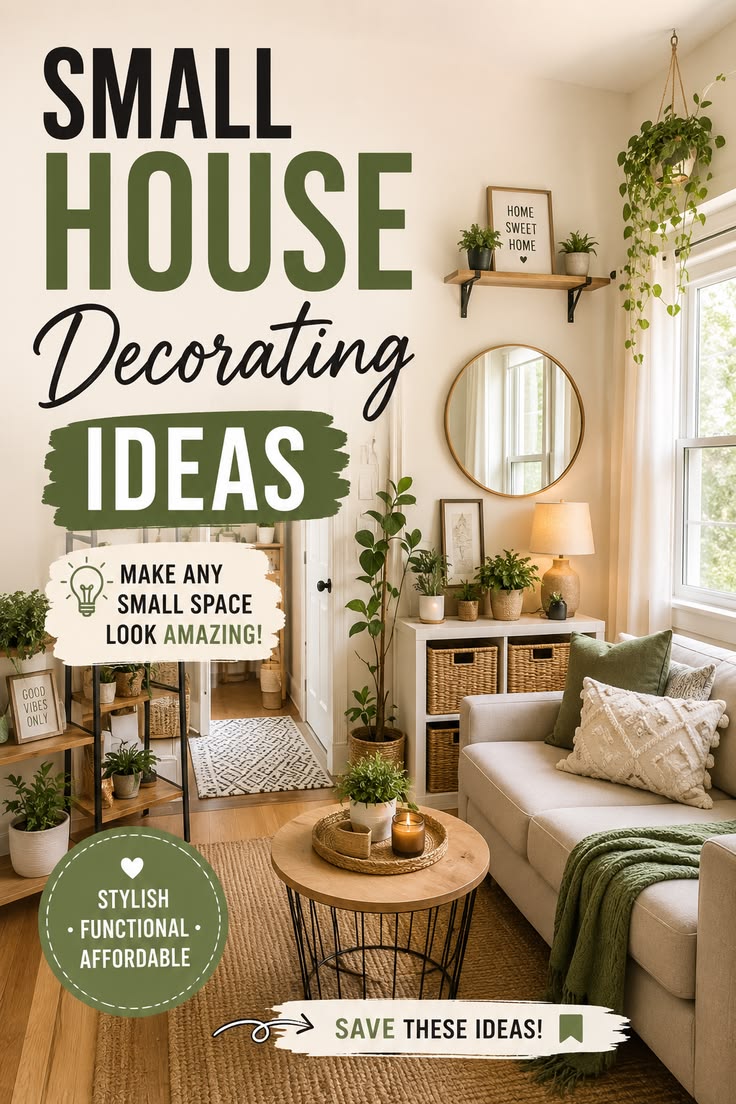

Living in a small house does not mean sacrificing style, comfort, or personality. With the right decorating choices, even the smallest home can feel spacious, organized, and beautiful. Whether you live in a compact apartment, a small cottage, or a cozy townhouse, thoughtful design can help you make the most of every inch.
The secret to decorating a small space is to combine functionality with creativity. Choosing the right furniture, using light colors, maximizing natural light, and keeping clutter under control can transform a cramped room into a welcoming retreat. You do not need a large budget or a major renovation to create a home that looks stylish and feels comfortable.
Here are 15 practical decorating ideas to help you achieve big style in a small house.
1. Choose Light and Airy Colors
Light colors can make a small room feel brighter and more open. Shades such as warm white, cream, beige, and pale gray reflect light and create a calm, uncluttered appearance.
Paint your walls in a soft neutral shade and use similar colors for larger furniture pieces to create visual continuity. You can introduce personality with colorful cushions, artwork, rugs, and decorative accessories.
For a cozy atmosphere, combine warm whites with natural wood and soft textiles. If you prefer a little drama, use a darker color on one carefully chosen wall or introduce deep shades through smaller accessories.
The goal is not to make every room completely white but to create a balanced palette that feels spacious and inviting.
2. Invest in Multifunctional Furniture
In a small house, every piece of furniture should earn its place. Multifunctional furniture helps you save space while maintaining comfort and style.
Consider a sofa bed for accommodating overnight guests, an ottoman with hidden storage, or a coffee table with drawers. A dining table that folds away or extends when needed can also be useful in a compact home.
In bedrooms, choose beds with built-in drawers to store bedding, clothing, or seasonal items. A storage bench near the entrance can provide seating while keeping shoes and bags organized.
Look for furniture that suits your room’s proportions. A few well-chosen pieces are often more effective than filling a small space with oversized furniture.
3. Make the Most of Vertical Space
When floor space is limited, look upward. Walls provide valuable storage and decorating opportunities that are often overlooked.
Install floating shelves to display books, plants, photographs, and decorative objects. Tall bookcases can provide substantial storage while taking up relatively little floor space.
In kitchens, wall-mounted racks can hold frequently used utensils, while hooks near the entrance can organize coats, bags, and keys.
You can also use tall curtains to draw attention upward and create the impression of higher ceilings.
Keep vertical displays organized rather than overcrowded. A combination of practical storage and a few decorative items will make your walls attractive without creating visual clutter.
4. Use Mirrors to Create the Illusion of Space
Mirrors are among the simplest decorating tools for making small rooms feel larger. They reflect light, add depth, and help create a more open atmosphere.
Place a large mirror opposite or near a window to reflect daylight throughout the room. A full-length mirror in a bedroom or hallway can also make a narrow area feel less enclosed.
For a stylish touch, choose a round mirror above a console table or a tall mirror with a slim frame in the living room.
Avoid positioning mirrors where they reflect clutter or an unattractive view. A carefully placed mirror can enhance the room’s appearance without taking up much space.
5. Let Natural Light Flow In
Natural light can make a small home feel fresh, cheerful, and spacious. Heavy curtains, dark window coverings, and bulky furniture near windows can prevent daylight from reaching the rest of the room.
Choose lightweight curtains in linen or sheer fabric to allow light to filter through. Keep window ledges relatively clear and use blinds when you need more privacy.
If possible, arrange furniture so it does not block windows or create dark corners.
For rooms with limited natural light, use a combination of ceiling lights, floor lamps, and table lamps. Warm, well-distributed lighting helps create a welcoming atmosphere after sunset.
6. Create an Open and Flexible Layout
A small home can feel cramped when furniture blocks pathways or divides the room unnecessarily. A thoughtful layout helps improve movement and makes the available space feel more usable.
Arrange furniture to preserve clear walking routes. In a small living room, consider placing a compact sofa against a wall and using a small round coffee table to make movement easier.
If your living room and dining area share one space, define each zone with a rug, lighting, or furniture placement rather than a bulky partition.
Keep frequently used areas accessible and avoid adding furniture simply to fill empty corners.
A flexible layout makes your home feel more comfortable while allowing each area to serve its purpose.
7. Choose Furniture With Slim Profiles
Large, bulky furniture can overwhelm a small room. Instead, choose pieces with clean lines, compact proportions, and open bases.
Sofas with raised legs allow more floor to remain visible, helping the room feel less crowded. Slim dining chairs, narrow side tables, and streamlined cabinets can provide functionality without dominating the space.
Transparent acrylic or glass furniture can also create a lighter visual effect because it does not interrupt the view as much as solid pieces.
Before buying furniture, measure your room carefully and consider how much space you need to walk around each item.
The best furniture for a small home combines practical dimensions with a design that complements the rest of the interior.
8. Use Rugs to Define Different Areas
Rugs can help organize a small home, especially when one room serves several purposes.
In an open-plan living area, a rug can define the seating zone, while a smaller rug beneath a dining table can visually separate the eating area.
Choose a rug that complements your furniture and color palette. Lighter shades and subtle patterns can help maintain an airy appearance, while a bold rug can add personality to an otherwise neutral room.
Avoid using too many small rugs in one space, as they can make the floor appear fragmented.
A well-proportioned rug helps different pieces of furniture feel connected and gives the room a more finished appearance.
9. Add Personality With Artwork
Small spaces can still have plenty of character. Artwork is an excellent way to express your style without taking up valuable floor space.
Hang a large statement print above a sofa, display a few coordinated photographs, or create a small gallery wall in a hallway.
Choose artwork that complements your interior colors, or use a striking piece to introduce contrast.
If wall space is limited, lean framed prints on a shelf or console table. This creates a relaxed, layered look and makes it easy to change the display whenever you want.
Remember that decorating a small home does not mean avoiding bold choices. One distinctive artwork can give a compact room a strong visual identity.
10. Keep Clutter Under Control
Clutter can quickly make a small home feel crowded. Good organization is therefore one of the most important elements of successful small-space decorating.
Use baskets, drawer organizers, storage boxes, and closed cabinets to keep everyday items out of sight. Assign a specific place for keys, mail, chargers, and other belongings that tend to accumulate.
Regularly review items you no longer need and donate, recycle, or discard them where appropriate.
For open shelves, display only a selection of favorite objects rather than filling every available space.
A clutter-free home is easier to maintain, feels more relaxing, and allows your furniture and decorations to stand out.
11. Bring Nature Indoors
Plants can add life, color, and texture to a small home without requiring a major investment.
Place a small plant on a windowsill, use a hanging planter to save counter space, or position a taller plant in an unused corner.
Choose varieties suited to your available light and the amount of care you can provide. Compact plants are especially useful on shelves and side tables.
You can also decorate with fresh flowers, dried branches, or natural materials such as wooden bowls and woven baskets.
These touches create a connection with nature and make a small home feel more welcoming.
12. Make a Small Bedroom Feel Luxurious
A compact bedroom can feel elegant and restful with a few thoughtful choices.
Start with coordinated bedding in soft neutral colors. Add two or three decorative cushions and a textured throw to create a layered appearance without overcrowding the bed.
Use wall-mounted bedside lights or compact floating shelves instead of bulky bedside tables. Under-bed storage can help keep clothing and bedding organized.
Choose curtains that complement the walls, and keep surfaces relatively clear to encourage a peaceful atmosphere.
Rather than adding lots of decorations, focus on comfortable fabrics, soft lighting, and a tidy arrangement.
13. Upgrade Your Small Kitchen With Smart Storage
Small kitchens benefit from clever storage solutions that keep essential items accessible without overcrowding work surfaces.
Use vertical shelves, hooks, drawer dividers, and stackable containers to make better use of cabinets and walls. Store frequently used cooking equipment within easy reach and move rarely used appliances into cupboards.
Keep countertops as clear as possible to create more room for food preparation.
Matching containers can give open shelves a more organized appearance, while good task lighting makes the kitchen more practical.
If you are updating the decor, consider light-colored cabinet fronts, simple handles, and reflective surfaces to help the space feel brighter.
14. Use Decorative Lighting as a Design Feature
Lighting can serve as both a practical necessity and an attractive design element.
In a small home, wall sconces, pendant lights, and slim floor lamps can provide illumination without taking up much floor space.
Use different lighting sources to create depth and define individual areas. A pendant light above a dining table establishes a focal point, while a table lamp beside the sofa creates a cozy reading corner.
Choose fixtures that suit the scale of the room. An oversized light can work as a statement piece, but it should not obstruct movement or overwhelm the surrounding decor.
Good lighting helps even the smallest rooms feel warm, comfortable, and thoughtfully designed.
15. Personalize Your Home With Meaningful Details
The final touch is making your home feel like yours. Small spaces do not need to look plain or follow every design trend.
Display favorite photographs, treasured books, handmade ceramics, or souvenirs from memorable trips. Choose a few meaningful items and arrange them where they can be appreciated.
You can also introduce personality through colorful cushions, distinctive cabinet handles, patterned lampshades, or a beautiful vase.
The secret is to balance personal expression with simplicity. Select decorations you genuinely love and give them room to stand out.
A small house feels most beautiful when it reflects the people who live in it.
Conclusion
A small house can have enormous style when every design choice is made with care. Light colors, multifunctional furniture, vertical storage, mirrors, and thoughtful lighting can make compact rooms feel more spacious and comfortable.
You do not need to follow every decorating trend or buy expensive furniture. Start by improving your layout, removing unnecessary clutter, and making better use of the space you already have.
Then introduce a few personal touches that reflect your taste and lifestyle.
Small spaces are not a limitation; they are an opportunity to be creative. With practical planning and thoughtful decorating, you can create a home that feels organized, stylish, welcoming, and perfectly suited to your everyday life.