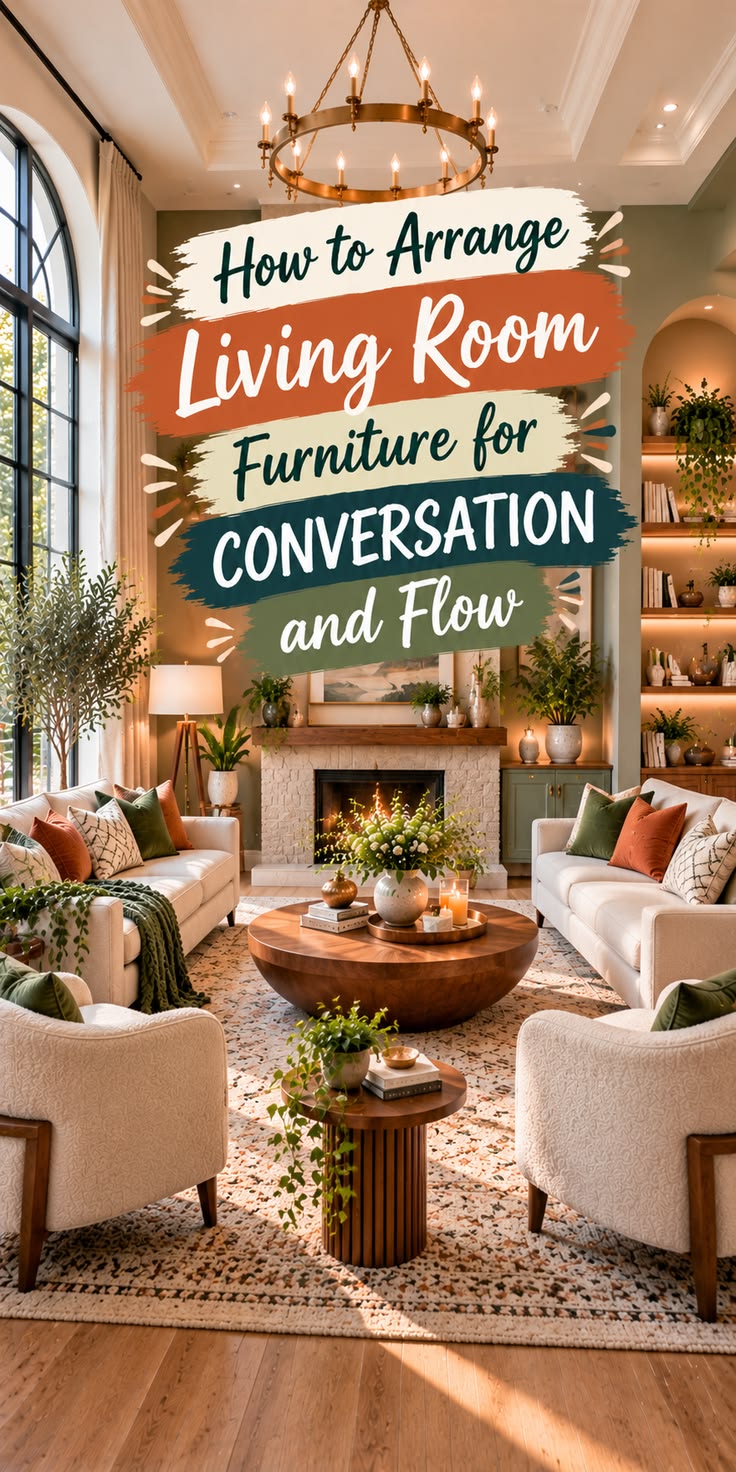

A beautiful living room is not just about having stylish furniture. The way you arrange your sofa, chairs, coffee table, lighting, and accessories can completely transform the appearance and functionality of your space. A thoughtful layout makes a room feel more spacious, comfortable, balanced, and welcoming, even if you are working with a small budget.
Whether you have a compact apartment or a large open-plan living area, arranging your furniture correctly can help you make the most of every corner. The secret is to create a natural flow, establish a focal point, and ensure that every piece serves a purpose.
Here are 12 practical tips to help you arrange your living room furniture for a beautiful and comfortable result.
1. Start with a Focal Point
Every well-designed living room benefits from a focal point. This is the feature that naturally attracts attention when someone enters the room.
Common focal points include a fireplace, a large window, a television, a statement artwork, or an attractive feature wall.
Once you identify the focal point, arrange your main furniture around it. For example, position the sofa to face the fireplace or television, then place additional seating nearby to create a comfortable conversation area.
If your room does not have an obvious focal point, you can create one using a large piece of artwork, a decorative console, or a beautifully styled wall.
Avoid giving every wall equal visual importance. A clear focal point helps the entire room feel more organized and intentional.
2. Position the Sofa Correctly
The sofa is usually the largest piece of furniture in a living room, so its placement has a major influence on the overall layout.
In a traditional arrangement, the sofa faces the focal point, with chairs or a loveseat positioned nearby. This creates a natural gathering area for family members and guests.
If your living room is large enough, consider placing the sofa away from the wall. This can help define the seating area and make the room feel more sophisticated.
In smaller rooms, positioning the sofa against a wall may free up valuable floor space. However, do not automatically push every piece of furniture against the perimeter. Experiment with different positions to see what works best.
Make sure the sofa does not obstruct doors, windows, radiators, or frequently used walkways.
3. Create a Comfortable Conversation Area
A beautiful living room should encourage people to sit, relax, and talk comfortably.
Arrange your sofa and chairs so that people can make eye contact without having to turn awkwardly. Depending on the room, you might position two chairs opposite the sofa or place an armchair at an angle beside it.
A coffee table in the middle of the seating arrangement provides a convenient surface for drinks, books, and decorative accessories.
Keep seating close enough to feel connected without making the arrangement cramped. As a general guideline, around 40–45 cm between the sofa and coffee table is often comfortable, although the ideal distance depends on the furniture and available space.
The aim is to create an inviting arrangement that works for everyday use as well as entertaining guests.
4. Choose the Right Furniture Size
Furniture that is too large can overwhelm a small living room, while pieces that are too small may look lost in a spacious interior.
Before buying or moving furniture, measure the room carefully. Consider the dimensions of the sofa, chairs, coffee table, television unit, and storage furniture.
In a compact living room, a streamlined sofa with raised legs can help the space feel more open. Nesting tables, compact armchairs, and multifunctional furniture are also useful options.
In a larger room, you can introduce a generously sized sofa, additional seating, or a substantial rug to create a more balanced appearance.
Remember to account for door openings, window access, and walking routes when measuring.
A well-proportioned layout is more important than filling every available corner with furniture.
5. Maintain Clear Walking Paths
Good furniture arrangement should make it easy to move around the room without bumping into tables or squeezing between chairs.
Identify the main routes people use to enter the living room, reach the sofa, access the windows, and move toward adjoining rooms.
As a practical starting point, aim for approximately 75–90 cm of clearance along main walkways where space allows. Smaller rooms may require tighter arrangements, but movement should still feel natural.
Avoid placing furniture directly in front of frequently used doors or blocking access to essential features.
If the room feels crowded, remove an unnecessary side table or move an occasional chair rather than trying to fit everything into the layout.
Clear pathways make a living room feel more spacious and improve its everyday functionality.
6. Use a Rug to Anchor the Furniture
A rug can bring the entire seating arrangement together. It visually defines the living area, adds texture, and makes the room feel more comfortable.
Choose a rug large enough to relate to the size of your seating furniture. Ideally, the front legs of the sofa and chairs should rest on the rug when the layout allows.
A rug that is too small can make the furniture arrangement feel disconnected. In larger rooms, a generously sized rug helps establish a cohesive seating zone.
For neutral interiors, a textured cream, beige, or natural-fiber rug can add warmth. If your furniture is simple, a patterned rug can introduce color and personality.
Make sure the rug is suitable for the room’s use and has an appropriate non-slip underlay, particularly on hard flooring.
7. Balance the Room Visually
Visual balance is essential for creating a harmonious living room. This does not mean every item must be symmetrical; rather, the furniture and decorative features should feel proportionate.
For example, a large sofa on one side of the room might be balanced by two smaller chairs, a floor lamp, and a side table on the other side.
You can also balance a heavy-looking piece of furniture with artwork, plants, or lighting nearby.
Symmetrical arrangements, such as matching lamps on either side of a sofa, create a formal and orderly appearance. Asymmetrical arrangements often feel more relaxed and contemporary.
Try to avoid concentrating all the furniture on one side of the room while leaving the opposite side completely empty, unless the architecture or layout makes this necessary.
8. Arrange Furniture for Small Living Rooms
Small living rooms require careful planning, but they can still look stylish and comfortable.
Start by identifying the essential pieces of furniture you actually need. A sofa, a compact coffee table, and one additional seat may be enough for a small space.
Choose furniture with practical proportions and consider pieces that offer storage. An ottoman with hidden storage or a nesting table can provide useful functionality without occupying unnecessary space.
Use vertical space for shelving and wall-mounted lighting to keep the floor relatively clear.
Mirrors can help reflect light, while a consistent color palette creates visual continuity.
Avoid overcrowding the room with too many small decorative objects. A few well-chosen pieces often make a stronger impression than numerous accessories.
9. Make the Most of a Large Living Room
Large living rooms can feel empty if furniture is arranged too far apart. The solution is to create distinct zones rather than spreading every item around the perimeter.
For example, establish a main seating area around the television or fireplace, then add a reading corner with an armchair and floor lamp.
In an open-plan space, a sofa can help separate the living room from the dining area without the need for a physical divider.
Large rugs, console tables, and carefully positioned lighting can reinforce these separate zones.
Choose furniture with enough visual presence to suit the room’s proportions. A larger coffee table or an additional armchair may help the layout feel complete.
The objective is to make a large room feel welcoming and connected rather than empty or difficult to navigate.
10. Layer Lighting Around the Furniture
Lighting can make even a simple furniture arrangement feel more polished.
Rather than relying exclusively on a central ceiling light, combine several light sources at different heights.
Place a table lamp beside the sofa for reading, a floor lamp near an armchair, and decorative lighting near a console or shelving unit.
Use ceiling lighting for general illumination and task lighting where activities require better visibility.
Warm-toned lighting often creates a comfortable evening atmosphere in living rooms. If possible, use separate switches or dimmable fixtures to adjust the brightness for different occasions.
Consider how natural daylight enters the room as well. Avoid placing tall furniture where it unnecessarily blocks windows or reduces the amount of light reaching the seating area.
11. Add Side Tables and Functional Accessories
Side tables make a living room more practical by providing convenient surfaces for drinks, books, lamps, and everyday items.
Place a side table beside the sofa or armchair where it can be reached easily. Choose a height that works with the seating and avoid tables that interfere with movement.
A console table behind a sofa can be useful in larger rooms, particularly when the sofa is positioned away from the wall.
Decorative accessories should support the overall arrangement rather than create clutter. A tray on the coffee table, a few books, a vase, or a small plant can add personality without overwhelming the space.
Think about how you use the room every day and prioritize accessories that are both attractive and useful.
12. Personalize the Layout with Art and Greenery
Once your main furniture is in place, use artwork, plants, cushions, and decorative objects to complete the room.
A large artwork above the sofa can establish a strong visual anchor, while smaller framed prints can add interest to an empty wall.
Plants introduce natural color and soften the appearance of furniture and architectural lines. A larger plant can fill an empty corner, while smaller plants work well on shelves or side tables.
Cushions and throws can connect different furniture pieces through shared colors and textures.
However, leave some empty space so the room does not feel overcrowded. The most attractive living rooms balance decorative details with areas of visual simplicity.
Conclusion
Arranging furniture for a beautiful living room is about creating the right balance between comfort, functionality, and style.
Start by choosing a focal point, positioning the sofa, and establishing a comfortable seating area. Then consider furniture proportions, clear walkways, rugs, lighting, and storage before adding decorative details.
Remember that the best layout depends on your room’s dimensions, architectural features, and everyday needs. You do not have to buy new furniture to achieve a fresh appearance; sometimes simply moving a sofa, changing the rug position, or removing unnecessary items can transform the space.
Take your time experimenting with different arrangements until the room feels natural to move through, comfortable to use, and visually balanced.
A beautiful living room is ultimately one that makes everyday life easier while providing a welcoming place to relax, spend time with family, and entertain friends.