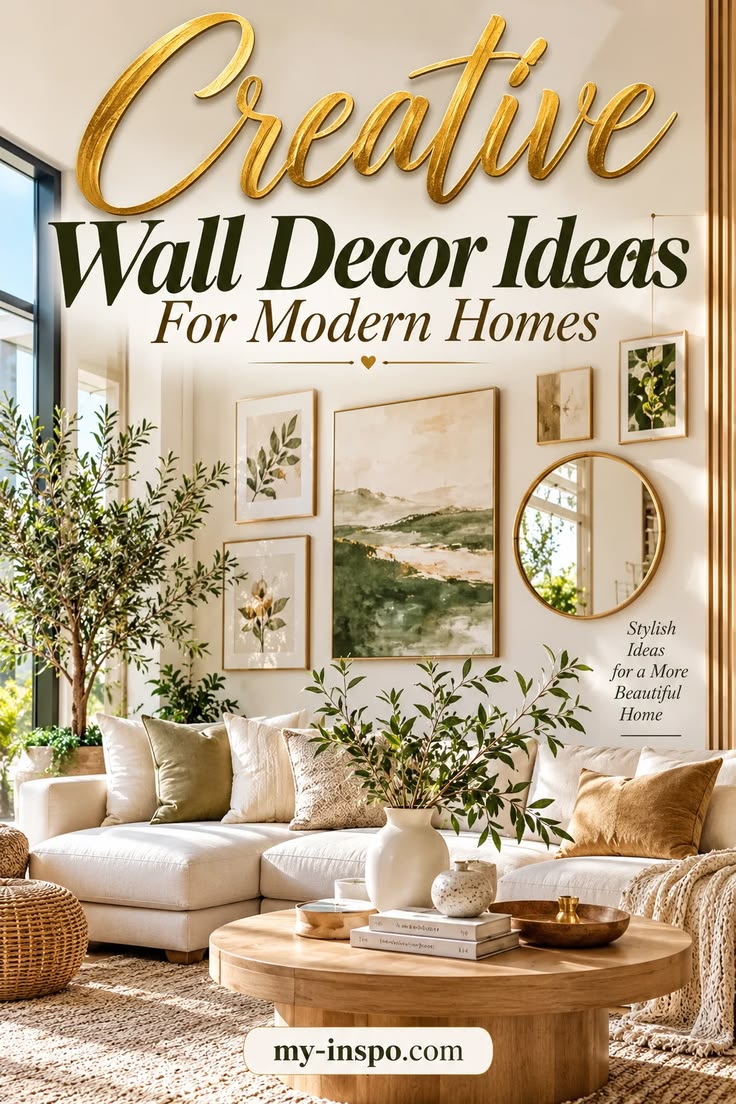

Walls play an important role in the overall appearance of a home. The right wall decoration can transform an ordinary room into a stylish, welcoming, and visually interesting space. Whether you prefer minimalist interiors, contemporary elegance, or warm and cozy designs, decorating your walls is an effective way to express your personality without replacing all your furniture.
Modern wall decor is not limited to paintings and framed pictures. Textured finishes, decorative mirrors, wooden panels, floating shelves, statement wallpaper, and creative gallery walls can all add character to your home.
The key is to choose decorations that complement your furniture, colors, lighting, and available space. Here are 12 of the best wall decoration ideas for modern homes.
1. Create a Stylish Gallery Wall
A gallery wall is a beautiful way to display artwork, photographs, and prints in one coordinated arrangement. It works particularly well in living rooms, bedrooms, hallways, and staircases.
You can combine abstract artwork, black-and-white photography, botanical prints, and personal photographs to create a collection that reflects your taste.
For a modern appearance, choose frames in black, white, natural wood, or metallic finishes. You can arrange them symmetrically for a clean look or mix different sizes for a more relaxed style.
Before hanging the frames, arrange them on the floor to experiment with the layout. Keep the spacing relatively consistent so the display feels intentional.
Styling tip: Choose artwork that shares two or three colors with your existing decor to create a cohesive appearance.
2. Add Wooden Wall Panelling
Wooden wall panelling is an attractive way to introduce texture, warmth, and architectural detail into a modern home.
Vertical slats can make a room feel taller, while horizontal designs can emphasize width. Decorative rectangular panels offer a more traditional appearance, whereas simple linear designs suit contemporary interiors.
Wooden panels work particularly well behind a television, around a dining area, or on the wall behind a bed.
You can choose natural oak tones for a warm, organic look or painted panels in beige, charcoal, or sage green for a more customized design.
If solid wood is outside your budget, consider suitable decorative MDF panels or wood-effect finishes. Always check the product’s suitability for your wall and room conditions before installation.
3. Use Large Statement Artwork
One oversized artwork can make a stronger visual impact than several small decorations. This approach is particularly effective in modern interiors, where simple furniture and uncluttered layouts allow individual pieces to stand out.
Abstract paintings, contemporary landscapes, minimalist illustrations, and large photographic prints are all popular choices.
Position the artwork above a sofa, console table, or bed, ensuring that its proportions complement the furniture below it.
For a balanced arrangement, artwork above a sofa often looks best when it occupies roughly two-thirds of the sofa’s width, although the ideal size depends on the room and composition.
You do not need an expensive original painting. Affordable prints, canvas artwork, or your own framed creations can achieve a similar decorative effect.
4. Decorate with Modern Wall Mirrors
Mirrors are both decorative and practical. They reflect light, add depth, and can make smaller rooms feel more open.
A large round mirror can soften a room dominated by straight lines, while rectangular mirrors often complement contemporary furniture. Arched mirrors add an elegant architectural detail.
Place mirrors where they reflect natural light, an attractive view, or an appealing part of the room. A mirror opposite a window can help distribute daylight, depending on the room’s layout.
For a sophisticated look, consider a slim black frame, brushed brass finish, or frameless design.
Avoid positioning mirrors where they reflect clutter or create unwanted glare. Choose secure fixings suitable for the mirror’s weight and the type of wall.
5. Try Textured Wall Finishes
Textured walls can add depth and sophistication without requiring lots of decorative accessories.
Popular options include limewash paint, decorative plaster, subtle textured wallpaper, and matte finishes that create gentle variations in color.
These treatments are particularly effective in bedrooms, living rooms, and dining spaces where you want the walls to become part of the design.
Warm beige, creamy white, soft grey, and muted earthy shades work well in understated modern interiors. Deeper colors can create a dramatic effect when used selectively.
If you are decorating on a budget, a fresh coat of paint in a carefully chosen color can make a substantial difference.
Always test samples on the wall before committing, as lighting can change how colors and textures appear throughout the day.
6. Install Floating Shelves
Floating shelves offer a practical way to decorate empty walls while creating additional display space.
They can hold books, small plants, framed photographs, ceramic objects, and decorative accessories. In a living room, arrange a few shelves above a console table or beside a television. In a bedroom, use them to display books and personal items.
For a modern look, choose simple shelves in natural wood, white, or black.
The most attractive arrangements usually include a mixture of heights and textures, with some empty space between objects. Avoid overcrowding the shelves, as too many accessories can make the wall feel cluttered.
Make sure the shelves and fixings are suitable for the intended load and wall construction.
7. Introduce Wallpaper with Contemporary Patterns
Wallpaper is an effective way to introduce color, pattern, and personality into a modern home.
Geometric designs, abstract patterns, delicate botanicals, textured neutrals, and large-scale floral prints can all create distinctive interiors.
A feature wall behind the bed or sofa is a good option if you want to make a statement without covering every wall.
For a minimalist home, choose subtle patterns in neutral shades. If your furniture is relatively simple, a bolder wallpaper can become the focal point of the room.
Consider removable wallpaper if you are renting or want an easier-to-change decorative option. Check the manufacturer’s instructions and ensure that the surface is suitable before applying it.
8. Add Wall-Mounted Lighting
Wall lighting can turn an empty wall into an attractive design feature while providing useful illumination.
Modern wall sconces are available in sculptural shapes, simple metal finishes, glass designs, and adjustable reading styles.
In the living room, place wall lights beside artwork or near a seating area. In the bedroom, wall-mounted reading lights can free up bedside table space.
For a more dramatic appearance, consider fixtures that direct light both upward and downward, creating decorative patterns on the wall.
Choose lighting that complements the room’s other finishes, such as black metal, warm brass, or understated white.
For electrical fixtures requiring new wiring, use a qualified professional where appropriate.
9. Create a Minimalist Wall Display
Minimalist wall decoration focuses on simplicity, balance, and carefully selected pieces.
Instead of filling every wall with pictures and accessories, choose a few items that have a clear visual purpose. A single framed print, a simple wall clock, or one sculptural object may be all you need.
This approach works particularly well in contemporary homes with neutral colors, clean lines, and uncluttered furniture.
To prevent minimalist walls from looking empty, pay attention to scale and placement. A larger artwork can create a stronger effect than several pieces that are too small for the available space.
Leave enough open wall area around your decorations so each piece has room to stand out.
10. Decorate with Indoor Plants and Botanical Displays
Plants introduce natural color and texture into modern interiors. Wall-mounted planters, botanical prints, and carefully arranged hanging plants can help soften hard surfaces and create a refreshing atmosphere.
A vertical plant display may work well in a bright living room, while smaller wall-mounted planters can add interest to a kitchen or balcony-adjacent space.
If you prefer a low-maintenance option, decorate with framed botanical artwork or dried arrangements.
Consider natural materials such as wood, ceramic, and woven textures to complement the greenery.
Before installing wall planters, check that the fixings can support their weight and that watering will not damage the wall. Choose plants according to the available light and your ability to care for them.
11. Use a Bold Accent Wall
An accent wall is one of the simplest ways to introduce personality into a modern home.
Choose one wall and paint it in a color that contrasts with the rest of the room. Deep green, navy blue, terracotta, muted burgundy, and charcoal can create striking results.
In a bedroom, the wall behind the bed is often a natural focal point. In a living room, the wall behind the sofa or television may work well.
For a softer appearance, choose a color only a few shades darker than the surrounding walls.
Balance stronger wall colors with lighter furniture, complementary textiles, and appropriate lighting. An accent wall should enhance the room rather than compete with every other decorative element.
12. Display Personal Collections and Handmade Decor
Modern interiors do not have to feel impersonal. Displaying meaningful objects is an excellent way to create a home that reflects your interests and experiences.
You might frame travel photographs, display handmade ceramics on shelves, hang woven wall art, or create a collection of prints from local artists.
Decorative plates, textile hangings, and handcrafted pieces can introduce texture and individuality into an otherwise simple room.
The key is to curate your collection rather than display everything at once. Choose a few pieces that work together in terms of color, shape, or theme.
This approach is especially useful for decorating on a budget because existing possessions and handmade artwork can become attractive design features.
How to Choose the Right Wall Decor for Your Home
Before decorating, consider the size of the room, the amount of natural light, your furniture arrangement, and your overall interior style.
Here are a few simple guidelines:
- For small rooms: Use mirrors, light colors, and appropriately scaled artwork to maintain a spacious appearance.
- For large walls: Consider oversized artwork, paneling, or a balanced gallery arrangement.
- For minimalist interiors: Choose a few distinctive pieces and leave plenty of open space.
- For cozy interiors: Combine warm colors, textured finishes, wooden details, and soft lighting.
- For budget decorating: Refresh existing frames, create your own artwork, or rearrange decorations you already own.
Conclusion
The best wall decoration ideas for modern homes combine style, functionality, and personal expression. From statement artwork and wooden panelling to mirrors, floating shelves, textured finishes, and botanical displays, there are countless ways to transform plain walls into attractive features.
You do not need to decorate every wall or spend a large amount of money to achieve beautiful results. Start with one area, choose decorations that complement your existing furniture, and build the design gradually.
Ultimately, the most successful wall decor is not simply about following trends. It is about creating a balanced, welcoming space that reflects your personality and makes your home feel complete.