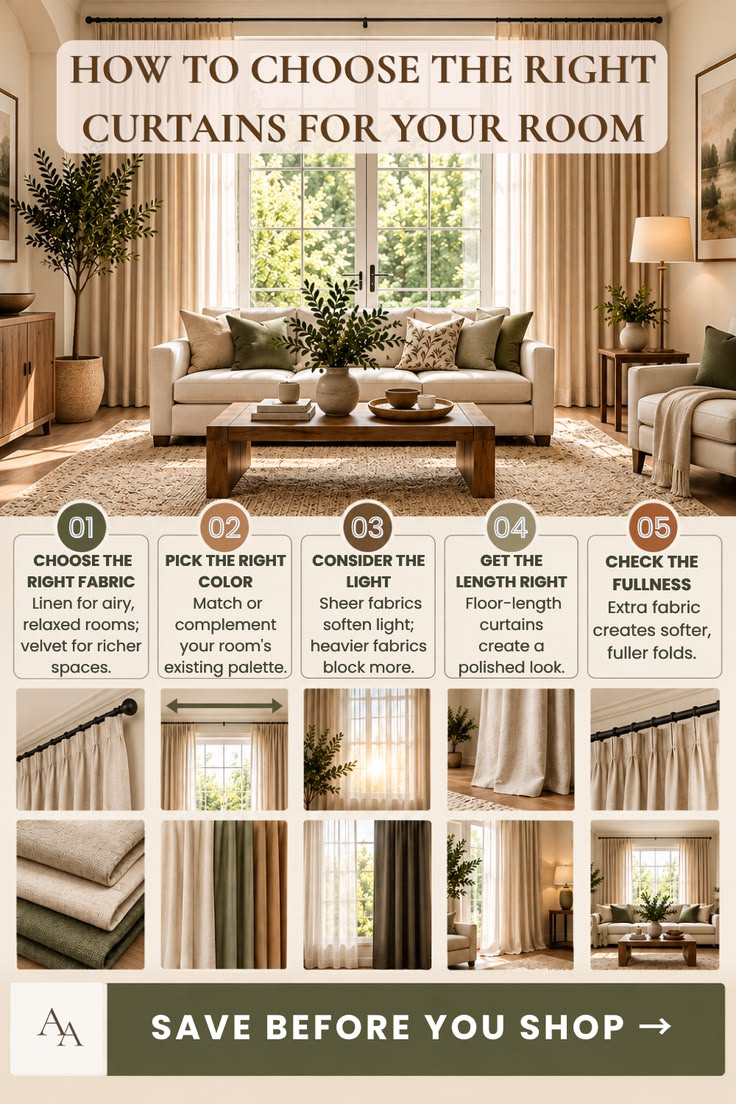

Curtains are more than just window coverings. They can transform the appearance of your living room, add warmth, improve privacy, control natural light, and bring your entire interior design together. The right curtains can make a small room feel more spacious, give a neutral interior more personality, or add a luxurious finishing touch to a modern home.
However, with so many fabrics, colors, patterns, and styles available, choosing the perfect curtains can feel overwhelming. The secret is to consider your living room’s size, lighting, existing decor, and everyday needs before making a purchase.
Here are ten practical tips to help you choose living room curtains that are beautiful, functional, and suited to your home.
1. Consider Your Living Room’s Style
Before choosing curtains, look at the overall style of your living room. Your curtains should complement your furniture, wall colors, flooring, and decorative accessories rather than compete with them.
For a modern living room, simple curtains in neutral shades such as white, beige, grey, or taupe can create a clean and elegant appearance. If you prefer a traditional interior, consider heavier fabrics, subtle patterns, or classic pleated designs.
For a cozy, natural look, linen or linen-look curtains work beautifully with wooden furniture, woven accessories, and earthy colors. Velvet curtains, meanwhile, can add richness and sophistication to a more luxurious interior.
You do not have to match your curtains exactly to your sofa or walls. Instead, choose a color and texture that complement the existing decor.
Styling tip: If your living room already contains bold patterns or colorful furniture, simple curtains can help balance the space. In a neutral room, patterned curtains can become an attractive focal point.
2. Choose the Right Curtain Color
Curtain color has a significant impact on the atmosphere of your living room. The right shade can make the space feel brighter, warmer, calmer, or more dramatic.
Neutral colors remain versatile choices because they work with many decorating styles. White and cream create a fresh appearance, beige adds warmth, and soft grey can complement contemporary interiors.
If you want to introduce more personality, consider sage green, dusty blue, terracotta, olive, or muted pink. Richer shades such as navy, forest green, and burgundy can create a dramatic effect in larger rooms.
When selecting a color, consider the amount of natural light your living room receives. Light-colored curtains can help maintain a bright appearance, while darker shades may make the room feel more intimate.
It is also useful to consider your existing color palette. Curtains can coordinate with cushions, rugs, artwork, or accent furniture without matching every item.
3. Select the Best Fabric
The fabric you choose affects how your curtains look, hang, filter light, and perform over time.
Linen and linen-look fabrics: These create a relaxed, natural appearance and are ideal for casual or contemporary living rooms. They allow varying amounts of light through, depending on their thickness and lining.
Cotton: Cotton curtains are versatile and available in many colors and patterns. They suit traditional and modern interiors and are generally straightforward to style.
Velvet: Velvet provides a rich, elegant finish and offers good light reduction when appropriately lined. It can also help create a warmer, more enclosed atmosphere.
Sheer fabrics: Sheer curtains allow daylight to filter through while softening the view outside. They work particularly well in bright living rooms where privacy requirements are limited.
Polyester blends: These are widely available and often offer practical benefits, including durability and relatively easy maintenance.
Choose fabric according to your lifestyle, desired appearance, and maintenance requirements rather than appearance alone.
4. Measure Your Windows Correctly
One of the most common curtain mistakes is choosing the wrong size. Curtains that are too short, too narrow, or poorly positioned can make even a beautifully decorated living room look unfinished.
Start by measuring the width of the curtain pole or track, rather than relying only on the window frame. Curtains generally need extra fabric to create attractive folds when closed.
As a general guideline, the combined flat width of the curtains is often around 1.5 to 2 times the pole or track width, depending on the fabric and the fullness you prefer. Some styles require more or less fabric.
For the length, decide whether you want curtains to finish just above the floor, touch the floor, or fall slightly beyond it. Floor-length curtains usually create a more elegant appearance in living rooms.
Measure from the correct hanging point, taking account of curtain rings, hooks, or track gliders.
Always check the manufacturer’s measuring instructions before ordering made-to-measure or ready-made curtains.
5. Decide Between Sheer and Blackout Curtains
Your living room’s lighting and privacy requirements should influence the type of curtains you choose.
Sheer curtains are excellent for rooms where you want to enjoy daylight while softening direct sunlight. They create an airy appearance and work particularly well in living rooms with attractive outdoor views.
Blackout curtains are designed to block most incoming light when properly fitted. They can be useful for television viewing, reducing unwanted street lighting, and creating a darker environment when needed.
For many living rooms, a layered approach offers the best flexibility. Combine sheer curtains with heavier curtains so you can adjust light and privacy throughout the day.
Remember that fabric thickness alone does not determine blackout performance. The lining, fit, and gaps around the window also affect how much light enters the room.
6. Choose the Right Curtain Length and Hanging Height
The way curtains hang can influence how large and elegant your living room appears.
Hanging the curtain pole higher than the top of the window can draw the eye upward and create the impression of greater ceiling height. Extending the pole beyond the sides of the window can also allow the curtains to sit away from the glass when open, helping more daylight enter.
Floor-length curtains generally provide a polished appearance. Curtains that stop well above the floor can sometimes make the room feel visually shorter, unless the window or furniture arrangement calls for a different length.
For a contemporary finish, curtains can just skim the floor. A slight break at the floor can create a softer effect, while heavily pooling fabric tends to require more maintenance.
Consider radiators, doors, furniture, and cleaning needs before choosing your final length.
7. Match Curtain Patterns to Your Decor
Patterns can bring character to your living room, but choosing the right design is important.
Plain curtains are a safe and versatile choice for rooms with patterned rugs, busy upholstery, or colorful accessories. They help maintain visual balance and make it easier to update other decorative elements later.
If your room is relatively simple, patterned curtains can introduce interest. Floral prints work well in traditional or romantic interiors, stripes can create a classic appearance, and geometric patterns often complement contemporary spaces.
Large patterns can make a bold statement, while smaller prints tend to create a more subtle effect.
Think about the scale of the room and the size of the window. A very busy pattern may overwhelm a small space, while a large living room can often accommodate a more dramatic design.
8. Think About Privacy and Sunlight
The position of your living room can influence which curtains will work best.
If your windows face a busy street or neighbouring homes, thicker curtains or layered window treatments can provide additional privacy. Sheer curtains alone may not offer sufficient privacy at night when indoor lights are switched on.
For south-facing or otherwise sun-exposed windows, consider lined curtains that help manage glare and protect furniture, rugs, and flooring from fading. If your living room receives limited daylight, lighter fabrics may help maintain a brighter atmosphere.
Thermal curtain linings can also help reduce heat loss through windows, although their effectiveness depends on the window, fit, lining, and installation.
Consider how your living room is used throughout the day. A room used for relaxing, watching television, and entertaining may benefit from flexible light control.
9. Select a Curtain Pole or Track That Complements the Room
Curtain hardware is an important finishing detail. The right pole or track can enhance the overall appearance and help your curtains hang properly.
Metal poles can complement modern interiors, while wooden poles often suit traditional, rustic, or natural decorating styles. Minimal tracks can create a clean appearance, especially when curtains extend close to the ceiling.
Choose hardware that supports the weight of your curtains and is appropriate for your wall or ceiling. Heavier fabrics may require stronger brackets and suitable fixings.
Consider the curtain heading as well. Eyelet curtains create broad, regular folds, pencil pleats offer a traditional finish, and wave headings produce smooth, flowing lines.
Your choice should reflect both your preferred style and how easily you want the curtains to open and close.
10. Set a Budget and Prioritize Quality
Beautiful curtains are available at different price points, so you do not necessarily need to spend a fortune to improve your living room.
Ready-made curtains can be an economical option if your windows are standard sizes. Made-to-measure curtains offer more control over dimensions, fabric, lining, and finish, but usually cost more.
When comparing prices, consider the complete cost, including the pole or track, brackets, lining, alterations, and installation.
If your budget is limited, invest in the correct size and a fabric that suits your needs rather than paying extra for a fashionable design you may quickly tire of.
Neutral curtains can be a practical long-term choice because they work with changing decor. You can introduce seasonal colors and patterns through cushions, throws, and other less expensive accessories.
Conclusion
Choosing the perfect curtains for your living room involves balancing appearance, practicality, and comfort. The right fabric, color, length, and hanging style can transform your windows and bring the entire room together.
Start by considering your living room’s existing decor, natural light, privacy requirements, and budget. Measure carefully, compare fabrics, and select a curtain style that complements your furniture without overwhelming the space.
Whether you prefer light linen curtains, elegant velvet panels, subtle neutral shades, or bold patterns, the best choice is one that suits your lifestyle and personal taste.
With thoughtful planning and attention to detail, curtains can become one of the most effective ways to create a living room that feels polished, comfortable, and welcoming.